


Photographers benefit from USB-C SD card readers due to their exceptional transfer speeds, reaching up to 10Gb/s with USB 3.2 Gen 2 and 40Gb/s with Thunderbolt 3 compatibility. These devices guarantee reliable data management, supporting multiple formats such as SD, microSD, and CompactFlash. Their design conserves camera battery life during transfers and enhances security against data loss. User-friendly features like plug-and-play functionality streamline workflows, minimizing wait times for file backups and optimizing overall performance. More insights await on their advantages.
Key Takeaways
- USB-C SD card readers offer transfer speeds up to 170MB/s, ensuring quick and efficient data management for photographers.
- They enable rapid memory card swaps, allowing photographers to replace cards without interrupting their workflow.
- By operating independently, these readers help conserve camera battery life during data transfers, reducing the risk of mid-shoot shutdowns.
- USB-C SD card readers facilitate direct file transfers, protecting against data corruption and ensuring original data quality is retained.
- Many models support multiple memory card formats, providing flexibility and compatibility with modern cameras for photographers on the move.
Enhanced Transfer Speeds With USB-C Technology
As photographers increasingly depend on high-speed data transfer, USB-C technology presents a compelling solution through its superior capabilities. USB-C card readers, particularly those that utilize the USB 3.2 Gen 2 standard, achieve impressive data transfer rates of up to 10Gb/s. For professionals seeking even faster performance, Thunderbolt 3 compatibility can boost speeds to a remarkable 40Gb/s, effectively minimizing wait times during significant file transfers. This efficiency is particularly essential for managing large raw image files, where time savings during backup can enhance overall productivity. Additionally, USB-C card readers effectively utilize the full potential of high-speed memory cards, preventing bottlenecks common with older USB standards and streamlining workflows for photographers using advanced camera systems. Modern USB-C adapters with durable zinc alloy construction ensure reliable performance even during frequent travel and outdoor photo shoots.
Reliability and Durability of Card Readers
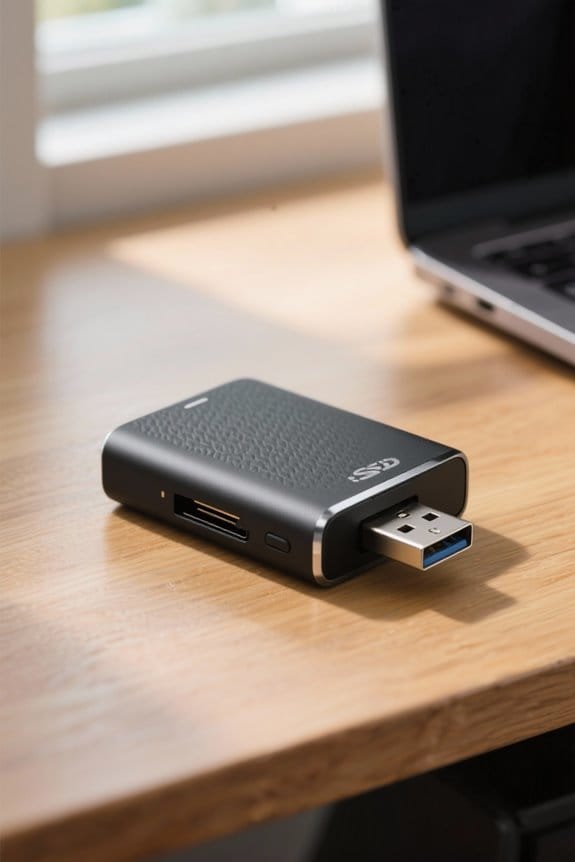
When selecting a card reader, reliability and durability are essential factors that greatly influence a photographer’s workflow efficiency. ProGrade card readers, crafted from high-quality materials, are designed for professionals who frequently travel with their gear, guaranteeing robustness and longevity. Unlike cheaper alternatives, these high-quality card readers do not depend on USB connections for power, markedly enhancing reliability during image transfers. Built to withstand demanding conditions, they minimize the risk of unexpected breakdowns that can derail tight project deadlines. In addition, investing in a durable card reader guarantees safe and efficient data transfer, thereby optimizing workflow efficiency. Ultimately, a reliable card reader serves as an indispensable tool for photographers, seamlessly facilitating their image transfer needs. The aluminum alloy construction of modern card readers provides superior heat dissipation and durability while maintaining a lightweight, travel-friendly design.
Convenience of Use for Photographers
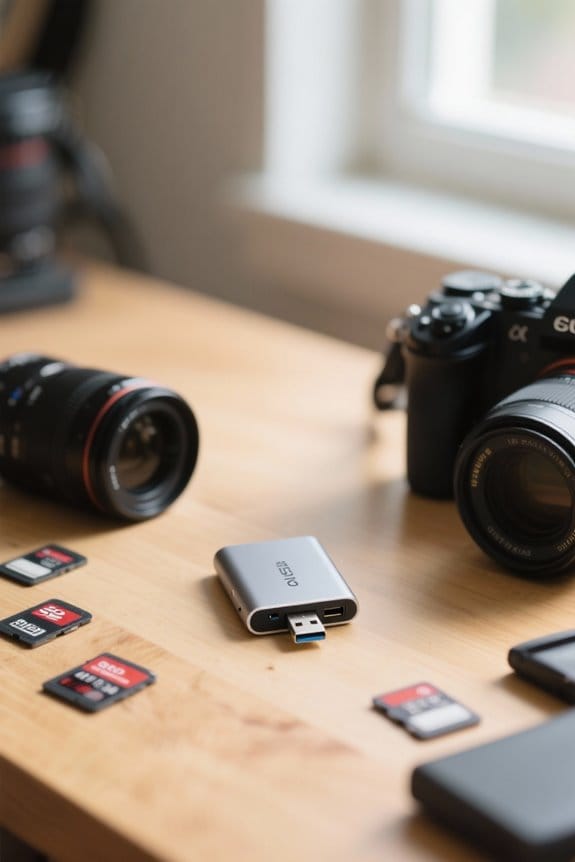
USB-C SD card readers exemplify convenience for photographers by enabling rapid memory card swaps, which creates an efficient workflow, particularly during high-paced shoots. These devices guarantee that memory cards can be quickly replaced without tethering to the camera, promoting uninterrupted productivity. Many high-quality USB-C SD card readers function as USB hubs, allowing photographers to transfer files to multiple devices simultaneously while continuing to shoot. With transfer speeds reaching up to 10Gb/s, queuing large RAW files becomes a streamlined process. Additionally, the versatility in compatibility with various memory card types allows seamless integration of modern photography equipment. This user-friendly design greatly simplifies file management, ensuring that essential tasks can be performed swiftly, thereby maximizing overall efficiency during vital assignments. Similar to how split keyboard designs can reduce physical strain by 37% for typists, USB-C card readers minimize the ergonomic stress of constantly removing cards directly from cameras.
Power Conservation for Camera Battery Life
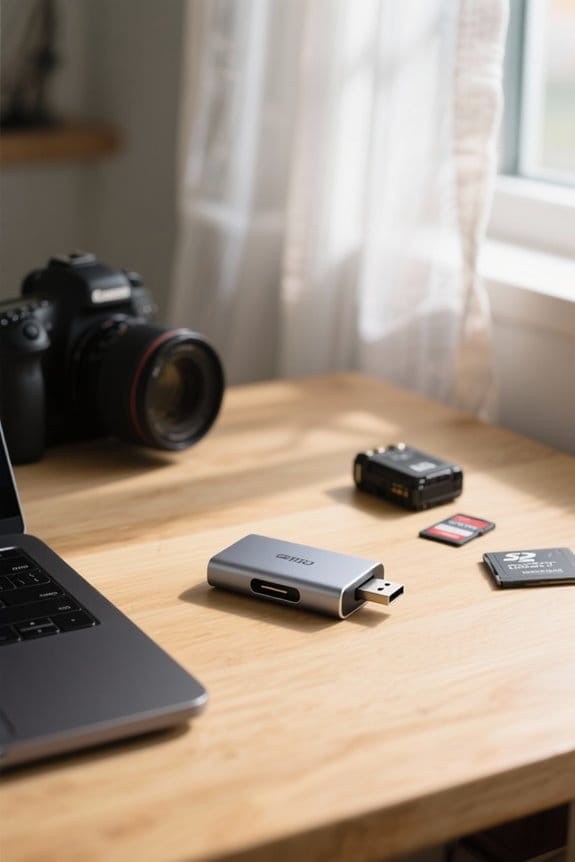
To maximize camera battery life, photographers benefit from employing external USB-C SD card readers, which facilitate image transfers without drawing power from the camera’s battery. Unlike direct USB connections, which can considerably deplete a camera’s battery during data transfers, card readers operate independently, ensuring the camera remains powered for shooting. By using a reader, photographers minimize the risk of mid-shoot shutdowns, preserving battery life during extended sessions. This is particularly essential in scenarios like outdoor shoots, where access to power may be limited. The efficiency of card readers in managing data transfers allows for prolonged camera operation, thereby ensuring photographers remain ready for capturing the perfect shot without interruptions caused by battery drain. Modern plug-and-play functionality enables quick setup without additional driver installations, making card readers an efficient solution for on-location shoots.
Compatibility With Multiple Memory Card Formats
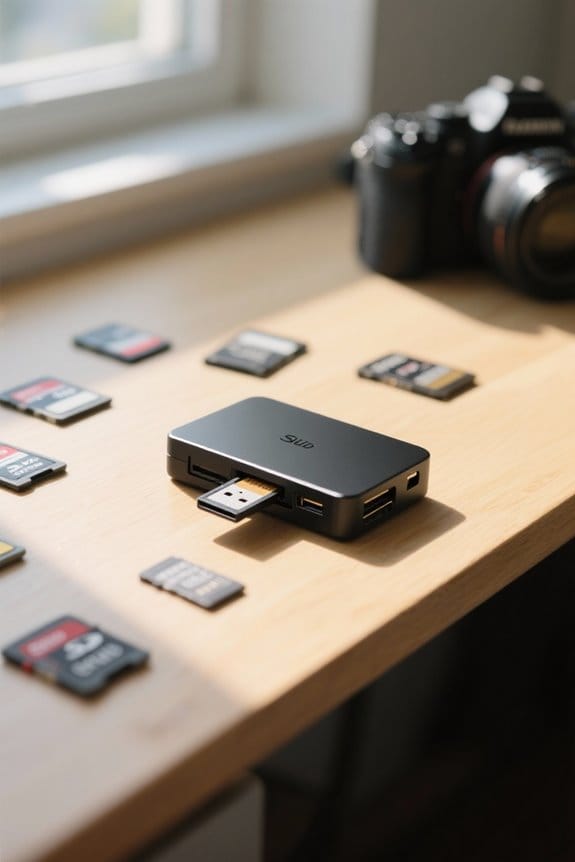
Versatility stands as a hallmark of modern photography, particularly when considering the diverse array of memory card formats utilized across various camera systems. USB-C SD card readers provide support for multiple formats, including SD, SDHC, SDXC, and microSD, essential for photographers working with differing equipment. Many advanced models also cater to CompactFlash (CF) cards, ensuring a broader compatibility for both professional and amateur photographers. High-quality USB-C SD card readers are designed to seamlessly integrate with modern cameras, laptops, and tablets, facilitating efficient image transfer processes. Moreover, user-friendly interfaces simplify the management of various memory card types, allowing quick swaps without hindrances. This compatibility minimizes the need for multiple devices, enhancing the overall photographic experience greatly. With data transfer speeds reaching up to 10Gbps, photographers can quickly transfer large collections of high-resolution images between devices.
Faster Workflow Efficiency in High-Pressure Situations
In high-pressure photographic environments, where speed and efficiency are essential, USB-C SD card readers play an important role in enhancing workflow productivity. With transfer speeds reaching up to 10Gb/s via USB 3.2 Gen 2 technology, photographers can offload large RAW files much faster than traditional methods allow. This rapid transfer is especially beneficial during events like weddings, where every moment counts. Additionally, the ability to connect multiple cards guarantees a seamless workflow, with no downtime between shoots. Many USB-C SD card readers also support direct connections to modern devices, eliminating the need for external power and simplifying on-the-go transfers. By preserving camera battery life during transfers, USB-C SD card readers contribute to quicker workflow efficiency in demanding situations. The durable aluminum designs of modern card readers ensure reliable performance and enhanced heat dissipation during intensive file transfers.
Managing Large Raw Files With Ease
Managing large RAW files efficiently requires robust tools that streamline the workflow, ensuring productivity remains high even under strenuous conditions. USB-C SD card readers, especially models like the ProGrade 3.2 Gen 2, dramatically reduce transfer times, achieving speeds of up to 10Gb/s, a significant upgrade from standard USB 2.0’s 480Mbps. This speed allows photographers to offload data promptly while continuing to shoot, particularly beneficial during high-demand events. High-quality readers enhance reliability, ensuring large files are transferred securely, minimizing data loss risks. With the ability to swap out memory cards quickly, using cookies to manage workflows becomes seamless, enabling effective handling of different camera formats without compatibility issues, consequently enhancing overall efficiency in managing large RAW files. Modern readers like the SanDisk MobileMate USB deliver impressive transfer speeds up to 170MB/s while offering the reliability of a two-year warranty.
Seamless Integration With Modern Photography Equipment
As photographers increasingly rely on advanced technology, the seamless integration of USB-C SD card readers into modern photography equipment plays an essential role in enhancing workflow efficiency. These card readers are designed to connect effortlessly with new cameras that feature USB-C ports, enabling transfer speeds of up to 10Gb/s, a significant improvement over traditional USB connections. Additionally, they support various memory card formats, ensuring compatibility with different camera systems, from DSLRs to mirrorless models. Their compact design enhances portability, allowing photographers to transport their essential gear without hassle. For professionals on the move, quick access to high-resolution images becomes key, and USB-C SD card readers provide that much-needed convenience and speed to match today’s fast-paced photography environment. Modern USB-C adapters with dual-functionality designs allow photographers to simultaneously charge their devices while transferring photos, maximizing productivity during shoots.
Security and Data Protection During Transfers
Efficient data transfer is paramount in photography, where the integrity of high-resolution images must be preserved throughout the process. USB-C SD card readers are designed to provide a much faster and more reliable means of transferring data, minimizing the risk of loss. Unlike direct camera connections, which can be interrupted if the card is prematurely removed, these card readers guarantee continuous data flow. Many high-quality models feature robust designs that safeguard cards from physical damage. Additionally, they operate independently of the camera’s battery, thereby eliminating risks related to power failure. By allowing photographers to manage and back up files directly onto a computer, USB-C SD card readers mitigate potential corruption and assure that original data quality remains intact throughout the transfer process. With gold-plated connectors enhancing signal reliability, modern USB-C card readers ensure consistent and secure data transmission for professional photographers.
User-Friendly Interfaces for Easy Operation
How can photographers streamline their workflow and enhance their data management experience? Using a USB-C SD card reader simplifies file navigation, featuring a user-friendly interface that eliminates the need for extensive technical knowledge. With plug-and-play functionality, users can connect the device and begin transferring files immediately, without additional drivers or software. High-quality readers often include LED indicators, providing clear, real-time feedback on transfer status, allowing photographers to monitor progress effortlessly. Ergonomically designed with non-slip surfaces, these devices guarantee a comfortable grip during use. Additionally, their compatibility with various memory card formats, complemented by clear labeling on card slots, further enhances the efficiency of transferring images, making the entire experience intuitive and straightforward for all users. Modern USB-C card readers support 5 Gbps transfer speeds for rapid importing of large photo libraries from memory cards to computers.
Comparative Advantage Over Direct USB Connections
While direct USB connections may seem convenient, USB-C SD card readers offer distinct advantages that greatly enhance the photographer’s workflow. These readers allow for transfer speeds of up to 10Gbps, markedly surpassing the outdated USB1.1 and USB2.0 connections often found in older cameras. With a card reader, photographers can continue shooting, as this method eliminates the risk of damaging memory cards during file transfers. Additionally, card readers typically support diverse memory card formats, offering flexibility when switching between various camera models. They also help conserve camera battery life, reducing drain during direct transfers. Ultimately, USB-C SD card readers facilitate faster and more reliable data transfers, allowing photographers to manage large volumes more effectively, particularly during vital events.
Frequently Asked Questions
What SD Card Do Professional Photographers Use?
Professional photographers typically use high-capacity SD cards with UHS-II ratings, ensuring camera compatibility and supporting rapid continuous shooting. Brands like SanDisk, Lexar, and ProGrade are favored for their reliability and superior performance in demanding environments.
Does SD Card Reader Affect Quality?
An SD card reader does not affect image quality, as data is copied intact. However, reader speed influences transfer efficiency, enabling faster access to high-resolution files without compromising the original quality during the process.
Should I Get a Card Reader or Just Plug My Camera Into My Computer?
In the digital dance of creativity, choosing a card reader enhances camera connectivity, safeguarding precious memories while speeding up transfers. Opting for a reader offers photographers the luxury of efficiency over a mere tethered connection.
Do USB SD Card Readers Work?
Yes, USB SD card readers work effectively by offering reader compatibility with various memory card formats, allowing users to transfer data swiftly to their devices. They enhance workflow by streamlining file transfers during photography tasks.


